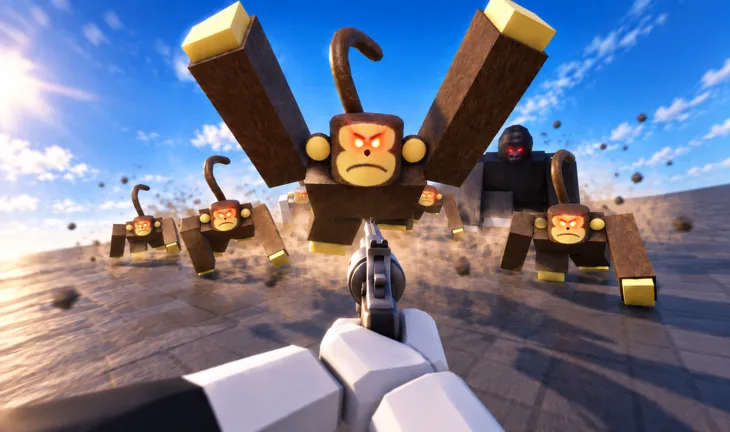
- Every Survive a Million Monkeys new update can shift the best weapons, enemies, and survival strategies.
- Five categories matter: weapons, enemies, maps, progression, and quality-of-life fixes.
- Recheck your build first after a patch — damage and crowd-control values change most often.
- Map awareness wins runs: new routes or spawn changes can invalidate old positioning habits.
- Reliable area-damage options generally stay top-tier when enemy density increases.
Why Every New Update Matters
A Survive a Million Monkeys new update can quietly rewrite the meta. Because the game is built around escalating waves of monkeys, even small changes to enemy speed, weapon damage, or upgrade costs can decide whether your usual build still carries you into late-run waves or collapses halfway through.
Treat every patch as a reset point. Instead of jumping straight into a run, spend a few minutes reviewing what changed so you do not waste resources on options that were nerfed or miss a newly added tool.
Do not assume old strategies still work after a patch. Balance changes to enemy behavior or weapon performance can turn a proven tactic into a fast loss if you run it on autopilot.
Here are the five update categories every player should track:
| Update Category | What It Covers | Player Impact |
|---|---|---|
| Weapons and Combat | Damage values, attack behavior, new weapons | Changes which loadout to prioritize |
| Enemies and Difficulty | New monkey types, wave pressure, behavior | Changes positioning and target priority |
| Maps and Locations | New routes, resource spots, terrain changes | Changes movement paths and safe zones |
| Items and Progression | Upgrade costs, rewards, progression systems | Changes resource spending order |
| Fixes and Quality of Life | Bug fixes, movement, spawning, interface | Smoother, more predictable runs |
Update Types and How They Change Your Runs
Combat changes are the most common patch content. Before your next run, confirm your main damage source and your crowd-control option are still performing as expected.
Combat Patches
- Damage tuning shifts weapon rankings
- New weapons may replace old staples
- Attack-speed changes affect wave clearing
Enemy Patches
- Faster monkeys punish static play
- Tougher enemies need burst damage
- New threats demand new target priorities
Map Patches
- New chokepoints create trap risks
- Extra open areas improve kiting
- Resource relocation changes routes
Enemy changes deserve special attention. If an update makes monkeys close distance faster or survive longer, your first adjustment should be movement-based — keep open escape routes and avoid dead ends, because damage alone no longer keeps the horde controlled.
Step-by-Step: Adapting After a New Update
Follow this routine after any Survive a Million Monkeys new update to get back to peak performance quickly.
Scan the Patch Categories
Review what changed across weapons, enemies, maps, progression, and fixes. Focus first on anything that touches damage output or enemy density.
Test Your Main Weapon
Run an early session and check whether your primary damage source still clears standard monkeys efficiently. Swap immediately if clearing speed dropped.
Verify Crowd Control
Confirm your area-damage or group-control option still handles clustered enemies. Late-run waves depend on multi-target value.
Relearn the Map
Walk key routes to spot new terrain, changed resource spots, or blocked paths. Update your mental list of open fighting zones and wide retreat routes.
Reorder Upgrade Priorities
Adjust spending based on the patch. If enemies got tougher, survivability and area-clear upgrades rise in priority; if they got faster, movement upgrades gain value.
Players who spend five minutes checking patch changes consistently outperform those who run their old build blind. Small adjustments compound over long survival runs.
Post-Update Strategy Adjustments
Regardless of patch details, the fundamentals hold: keep moving, protect an escape route, and prioritize the enemies threatening your movement before distant targets.
Use this table to translate common patch effects into strategy changes:
| If the Update... | Your Adjustment |
|---|---|
| Buffs area-damage weapons | Cluster enemies in open space, then strike groups |
| Adds faster monkey types | Prioritize them when they split from the pack |
| Increases enemy durability | Raise burst-damage and survivability priority |
| Changes map layout | Re-scout wide pathways before heavy waves |
| Lowers upgrade costs | Invest earlier, before difficulty spikes |
| Alters spawning | Watch multiple approach directions, not one lane |
After Every Patch, Confirm:
- Main weapon still clears standard monkeys quickly
- Crowd-control option handles grouped enemies
- Known escape routes are still open
- Upgrade priority matches new balance
- No new enemy type disrupts movement
FAQ
Q: How often should I check for a Survive a Million Monkeys new update?
Check before long play sessions. Even small patches can alter weapon performance, enemy behavior, or map layouts, so a quick review keeps your build from falling behind the current balance.
Q: Which update category affects survival runs the most?
Enemies and difficulty changes usually matter most, because enemy speed, durability, and wave density directly determine how much space and damage you need to stay alive.
Q: Do weapon tier rankings change after updates?
Yes. Combat patches that adjust damage, attack speed, or add new weapons can shift rankings. Area-damage options tend to stay strong because enemy density is the core threat, but always retest after a patch.
Q: What should I do first after a major patch?
Test your main weapon and crowd-control option in an early run, then re-scout the map for terrain or route changes. Finally, reorder your upgrade priorities to match the new balance.
Staying Ahead of the Meta
Long-term success in Survive a Million Monkeys comes from treating updates as opportunities rather than setbacks. Players who adapt their weapon choices, movement habits, and upgrade order after every patch keep surviving deeper into the horde while others struggle with outdated tactics.
Focus on fundamentals that patches rarely remove: mobility, escape routes, grouped enemy control, and early upgrade investment. Then layer patch-specific adjustments on top. That combination keeps your runs stable no matter how the balance shifts through 2026 and beyond.
Keep a simple note of what each update changed and how you responded. Over time this record becomes your personal meta tracker, making every future patch faster to adapt to.